Paraesophageal recurrence of hiatal hernia. Radiological diagnosis and laparoscopic surgical resolution
DOI:
https://doi.org/10.31837/cir.urug/6.1.6Keywords:
hiatal hernia, surgical treatment, imagenology, recurrences, laparoscopic surgicalAbstract
The radiological recurrence rate after surgery for type IV large hiatal hernias is close to 50%. Most of the time, recurrence involves a partial ascent of the fundoplication to the thorax (telescoping), and if it does not have clinical expression, conservative management can be chosen (only 3-6% require revision surgery). However, sometimes there are other types of recurrences (paraesophageal) that must be evaluated by functional, endoscopic and radiological studies, which cause dysphagia more frequently.
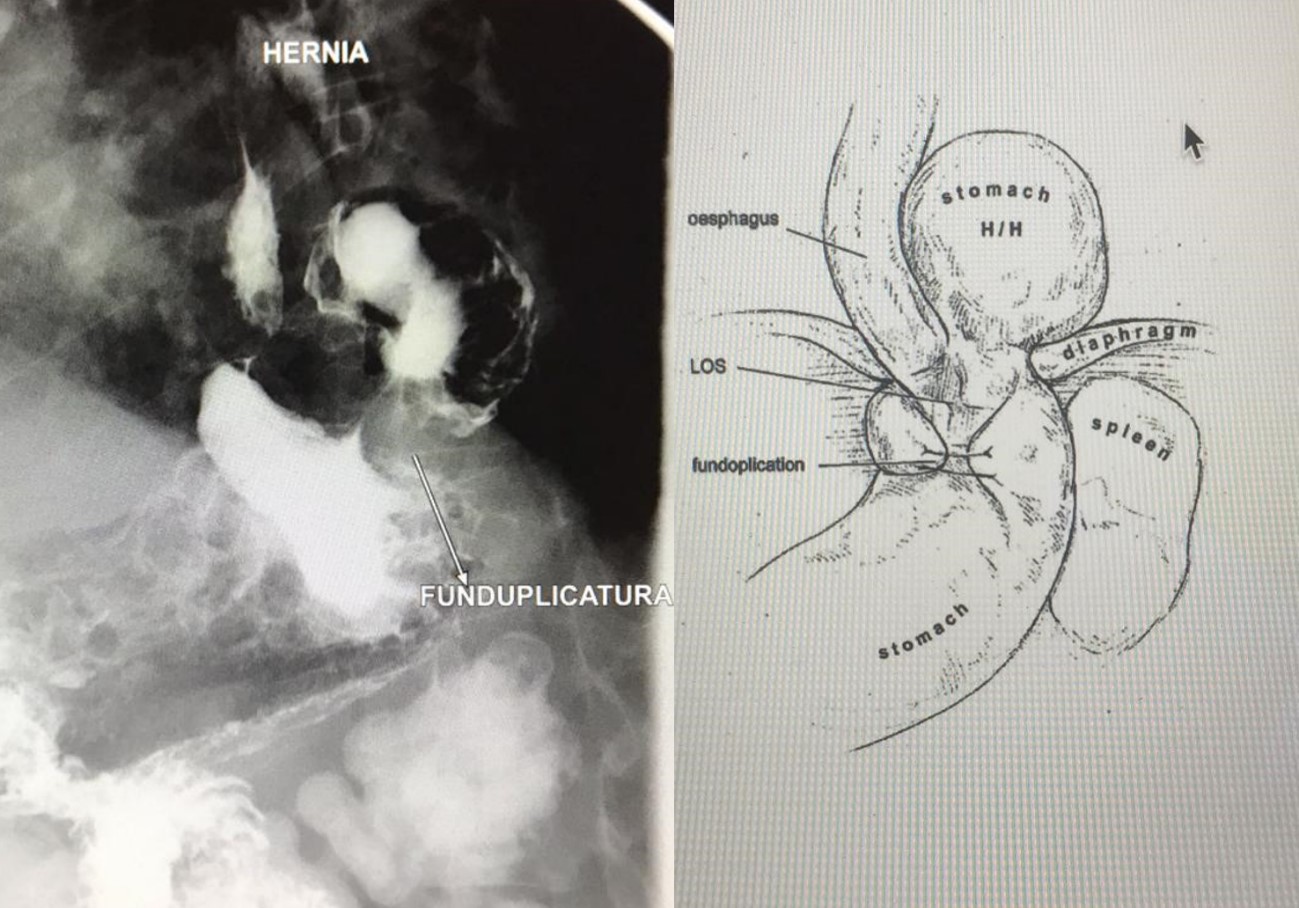
A contrasted upper digestive transit allows in this case to identify the type of hernia recurrence, with partial migration of the gastric fundus towards the left paraesophageal thorax, and a continent fundoplication but technically performed below what is desirable (upper body) (figure).
The resolution of the picture implies the reduction of the hernia to the abdominal cavity, with closure of the diaphragmatic defect, dismantling the anterior fundoplication by anatomizing the area and reconfection of a new fundoplication.
Downloads
Published
How to Cite
Issue
Section
License

This work is licensed under a Creative Commons Attribution-NonCommercial 4.0 International License.
All articles, videos and images published in Revista Cirugía del Uruguay are under the Creative Commons CC licenses, which is a complement to the traditional copyright, in the following terms: first, the authorship of the referred document must always be acknowledged and secondly none of the article or work published in the journal may have commercial purposes of any nature. The authors retain their copyrights and give the magazine the right of first publication of their work, which will be simultaneously subject to the Creative Commons Attribution-NonCommercial 4.0 International License license that allows the work to be shared whenever the initial publication is indicated in this journal.